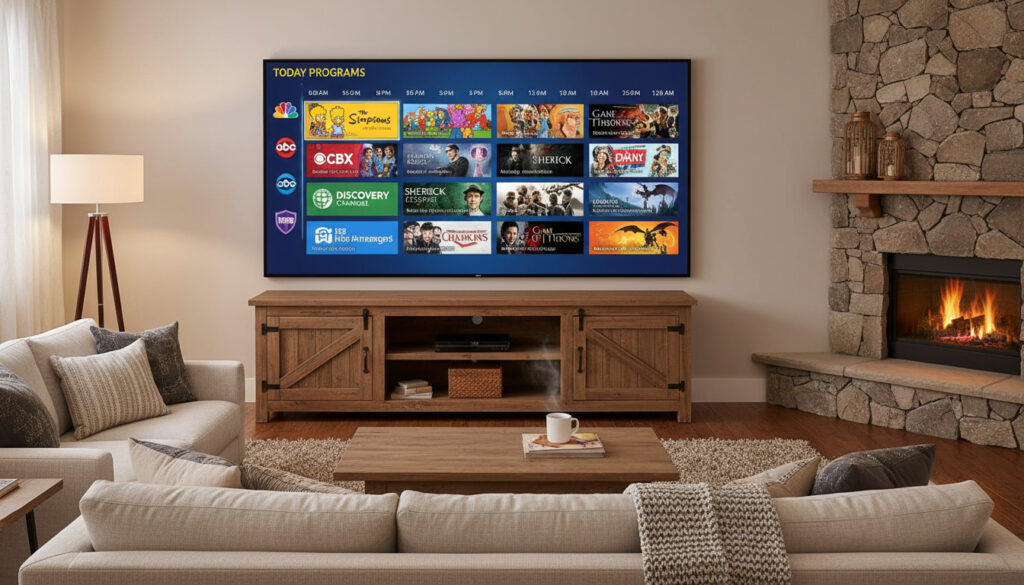
TV-Guide DR – Overblik over dagens programmer
DR TV Guide: Navigating Denmark’s Public Service Programming
Finding quality programming in an increasingly fragmented media landscape requires reliable navigation tools. Danish television schedules have evolved significantly, with Danmarks Radio maintaining comprehensive guides across multiple platforms. The broadcaster serves as the cornerstone of public service media, offering everything from breaking news to prestige drama series through both traditional broadcasts and digital streams.
Channel Grid and Accessibility
DR operates three primary linear channels, each serving distinct audience needs. DR1 concentrates on news, documentaries, and broad appeal entertainment, while DR2 targets culturally engaged viewers with in-depth analysis and political coverage. DR Ramasjang provides children’s programming from morning through early evening, completing a portfolio that addresses demographic diversity without commercial interruption.
Beyond traditional broadcasts, DRTV functions as the broadcaster’s streaming platform, archiving content and enabling time-shifted viewing. This dual approach reflects broader shifts in consumption habits, where linear appointment viewing coexists with on-demand accessibility. The integration between scheduled broadcasts and digital availability ensures audiences rarely miss premieres of flagship productions.
Programming Insights
Prime time scheduling follows predictable patterns that Danish audiences have internalized over decades. Weekday evenings typically feature news at 18:30 and 21:00, framing entertainment content that runs between these fixed points. Weekend programming shifts toward drama series, feature films, and cultural magazines, accommodating different viewing rhythms.
Recent data indicates steady engagement with linear television despite streaming growth. Danish Media’s annual reports suggest public service channels retain significant market share during evening hours, particularly among demographics over 35. This persistence challenges assumptions about inevitable digital migration, suggesting instead a hybrid model where traditional guides remain relevant.
Weekly Schedule Structure
| Time Slot | DR1 | DR2 | Content Type |
|---|---|---|---|
| 06:00-09:00 | Morning Programs | Re-runs | News/Morning |
| 09:00-12:00 | News | Documentaries | Current Affairs |
| 12:00-18:00 | Afternoon Programming | Cultural Magazines | General Entertainment |
| 18:00-21:00 | Evening News / Shows | Debate Programs | Prime Time News |
| 21:00-23:00 | Drama Series / Film | Documentary / Society | Prestige Content |
Content Categories and Production Values
Danish public service programming distinguishes itself through specific genre concentrations. Crime dramas and historical series dominate international sales discussions, yet domestic schedules balance these with reality programming, cooking shows, and home renovation content that anchors daily viewing.
The Ministry of Culture’s public service contract mandates specific quotas for news, education, and Danish-language content. These requirements shape scheduling decisions, ensuring that Saturday evenings might feature orchestral concerts while Tuesday nights present investigative journalism. This obligation to diversity separates DR’s guide offerings from commercial alternatives focused purely on ratings optimization.
Evolution of Television Navigation
Printed TV guides once occupied coffee tables across the country, but digital transformation has redirected discovery mechanisms. The 2000s introduced electronic program guides through digital terrestrial television, followed by smartphone applications that enable personalized reminders and recommendations.
TV2’s commercial scheduling competes for attention, yet DR maintains distinctive positioning through its public service mandate. The transition from teletext to responsive web design and mobile apps reflects technical modernization without abandoning the core curatorial function of helping audiences locate relevant content among hundreds of daily broadcast hours.
Linear Versus On-Demand Clarity
Understanding the relationship between broadcast schedules and streaming availability requires navigating different interface paradigms. Linear television demands temporal awareness—knowing that specific programs air at fixed times—while streaming platforms organize content through genre categories and algorithmic suggestions.
DR’s current strategy bridges these modes, maintaining strict broadcast schedules while simultaneously releasing entire series on DRTV. This simultaneous availability, known as stacking, allows binge-watching for digital natives while respecting traditional viewing habits. Cultural analysts note that this flexibility sustains audience share without forcing technological adoption on reluctant demographics.
Market Position and Future Trajectories
The broader Nordic television market influences scheduling decisions, with Swedish and Norwegian public broadcasters facing similar fragmentation challenges. DR’s programming budget, determined through political negotiations every four years, directly impacts original production capacity and foreign acquisition possibilities.
International streaming services have introduced competitive pressure, yet linear television retains advantages for live events, breaking news, and communal viewing experiences. Sports coverage, including handball championships and cycling tours, drives significant concurrent viewership that validates continued investment in broadcast infrastructure alongside digital development.
Industry Perspectives
The television guide has transformed from a printed list into a sophisticated digital service, yet the fundamental need remains unchanged: connecting audiences with stories that matter to them. Our scheduling decisions balance immediate news value with cultural durability.
—DR Programming Director
Public service media must remain visible in an algorithm-driven environment. If we rely solely on discovery through scrolling, we lose viewers who depend on habitual appointment viewing.
—Media Researcher, Copenhagen University
Summary
DR’s television scheduling continues serving as Denmark’s primary cultural compass, navigating between traditional public service obligations and contemporary viewing behaviors. The persistence of structured programming guides amidst streaming proliferation suggests that audiences value curation and temporal anchors. As distribution technologies evolve, the fundamental relationship between broadcaster and viewer—mediated through reliable scheduling information—maintains its relevance in Danish media consumption.
Frequently Asked Questions
How do I find DR’s TV guide?
DR’s official TV guide is available at dr.dk/tv-guide, where you can view schedules for all DR channels. The guide displays program information up to seven days in advance.
Can I watch DR programs without following the broadcast schedule?
Yes, all DR programs are available on the streaming service DRTV, where content remains accessible for up to one year after its initial linear broadcast.
Which channel shows DR’s news?
The main channel DR1 broadcasts Dagsrevyen at 18:30 and 21:00 on weekdays. Additionally, news runs continuously across all three channels as well as on the news API.
Is DR Ramasjang only for children?
DR Ramasjang primarily targets children between 3 and 10 years of age, broadcasting from morning through early evening. The channel also includes ultra-niche programming for families with small children.
Flere relaterede indlaeg
 Sko Størrelse Guide: Mål din fod i cm og find rigtig pasform
 Susanne Aamund: Dansk billedkunstner med poetiske værker
 Anna Bogdanova: Træningsprogrammer, bøger, alder og anmeldelser
 Elgiganten iPhone 17 Pro – Pri , farver og pecifikationer
 Cover til iPhone 16e – Find det perfekte cover her
 Curry Leaves – Indisk restaurant i Sønderborg med autentisk mad
 Rick Astley: Biografi, familie og karriere i dag (2025)
 Victor Bak – Profil, familie og transferrygter 2026
